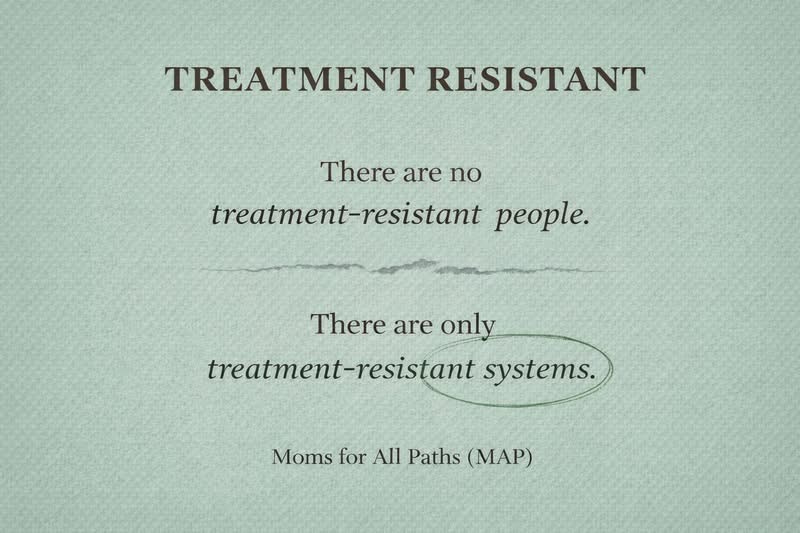
Treatment Resistant?
When Systems Fail and People Get the Blame

There’s a phrase that gets used when people don’t improve the way they’re expected to.
Treatment resistant.
It sounds clinical. Neutral. Even scientific.
But it carries a quiet accusation.
It suggests refusal. Defiance. Lack of motivation.
As if the person is the problem.
But what if resistance isn’t coming from the person at all?
What if it’s coming from systems that only work for people who can comply perfectly; show up on time, tolerate side effects, navigate bureaucracy, stay housed, stay insured, stay regulated?
When someone cycles in and out of programs, we say they’re non compliant.
When they stop medication because it makes them sick, we call them unwilling.
When they relapse after losing housing or support, we say treatment failed.
And eventually, we say they are treatment resistant.
But survival in a rigid system can look like resistance.
People don’t resist treatment because they want chaos.
They resist pain.
They resist shame.
They resist programs that punish them for being human.
Addiction treatment often asks for stability before offering support.
It demands abstinence before safety.
Compliance before compassion.
Paperwork before relief.
When someone can’t meet those demands, we label them instead of questioning whether the model fits the reality of their life.
There is no such thing as a treatment resistant person.
There are only treatment resistant systems.
And this isn’t abstract for me.
My daughter went through more than twenty rehabs, IOPs, and sober living programs. Over and over, the language was the same noncompliant, unwilling, resistant. Each time she struggled, the focus narrowed in on what she wasn’t doing right.
What I watched wasn’t resistance. It was a young woman cycling through models that couldn’t adapt to her reality and programs that required stability she didn’t yet have, that punished struggle instead of responding to it, that offered shame where flexibility was needed.
Over time, it became easier to label her than to ask whether the treatment itself was failing.
We don’t call insulin dependent diabetics “treatment resistant” when their blood sugar fluctuates.
We don’t label cancer patients “non-compliant” when chemotherapy is unbearable.
We adjust care.
But with addiction, we still moralize struggle.
We forget that people using drugs are often navigating trauma, poverty, grief, chronic pain, unstable housing, criminalization, and a toxic supply all at once.
Staying alive under those conditions isn’t resistance.
It’s endurance.
If someone keeps showing up even inconsistently, that’s not refusal.
It’s persistence.
If someone tries again after relapse, that’s not failure.
It’s hope.
If someone uses what’s available to cope, that’s not defiance.
It’s survival.
Words matter.
When we call people “treatment resistant,” we stop asking how treatment could change.
We stop innovating.
We stop listening.
And families are left carrying blame instead of support.
It’s time to retire this phrase and not because people are fragile, but because the language is lazy.
Don’t forget to follow us on X @momsallpaths, and if you aren’t already a member, join the Facebook group at https://www.facebook.com/groups/momsforallpaths